
Locating Underground Services
BeforeUdig:
Every locate that we do requires us to complete a ‘plans submission’ on the BeforeUdig platform, as this is an essential part of a professional locate, informing us of the asset owners that believe they have assets in your scope, we then set out to find these assets for you the client.
EM Locating:
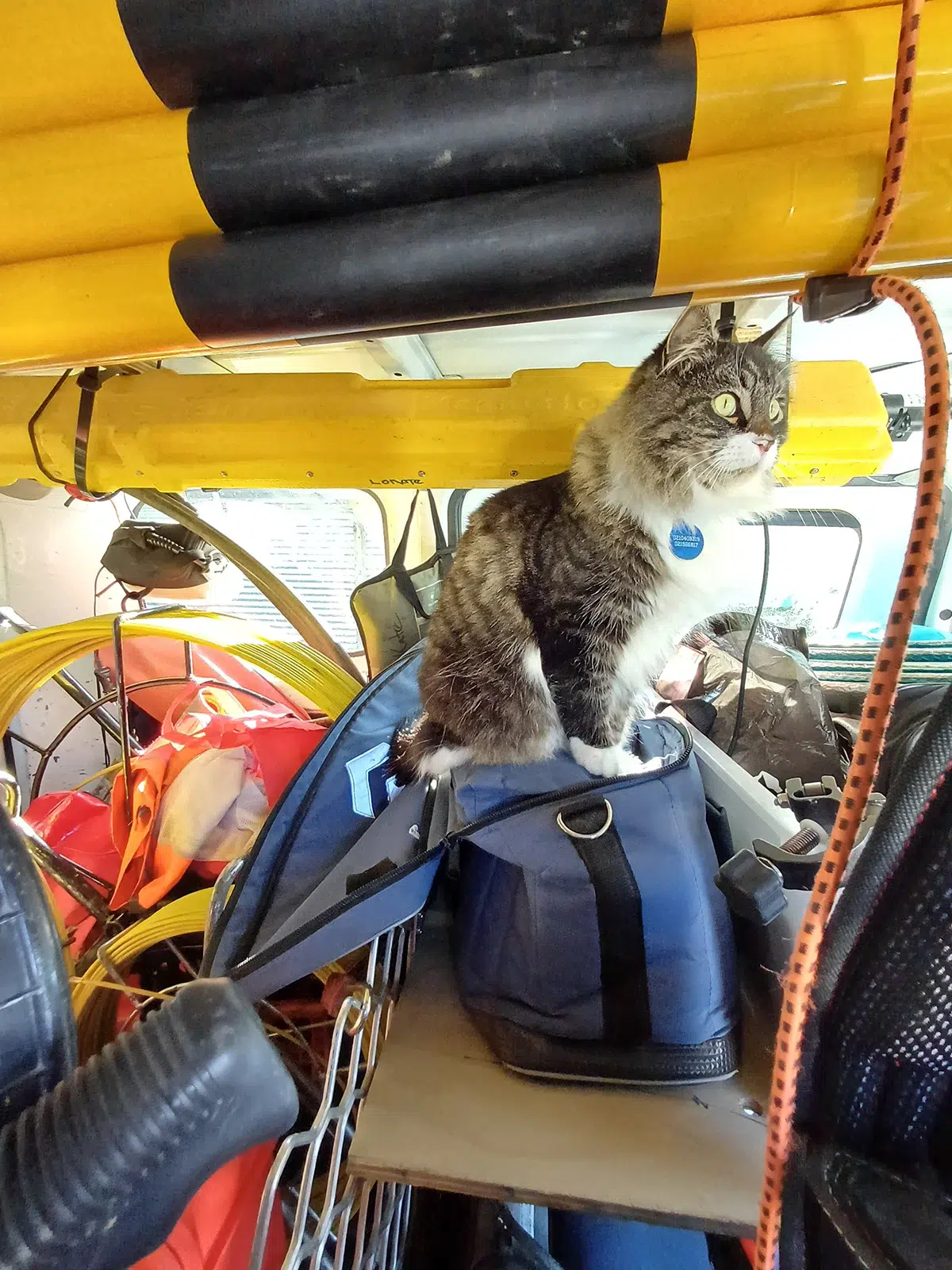
Aka: EML/EMF Locating, crassly spoken of as Cat and Genny.
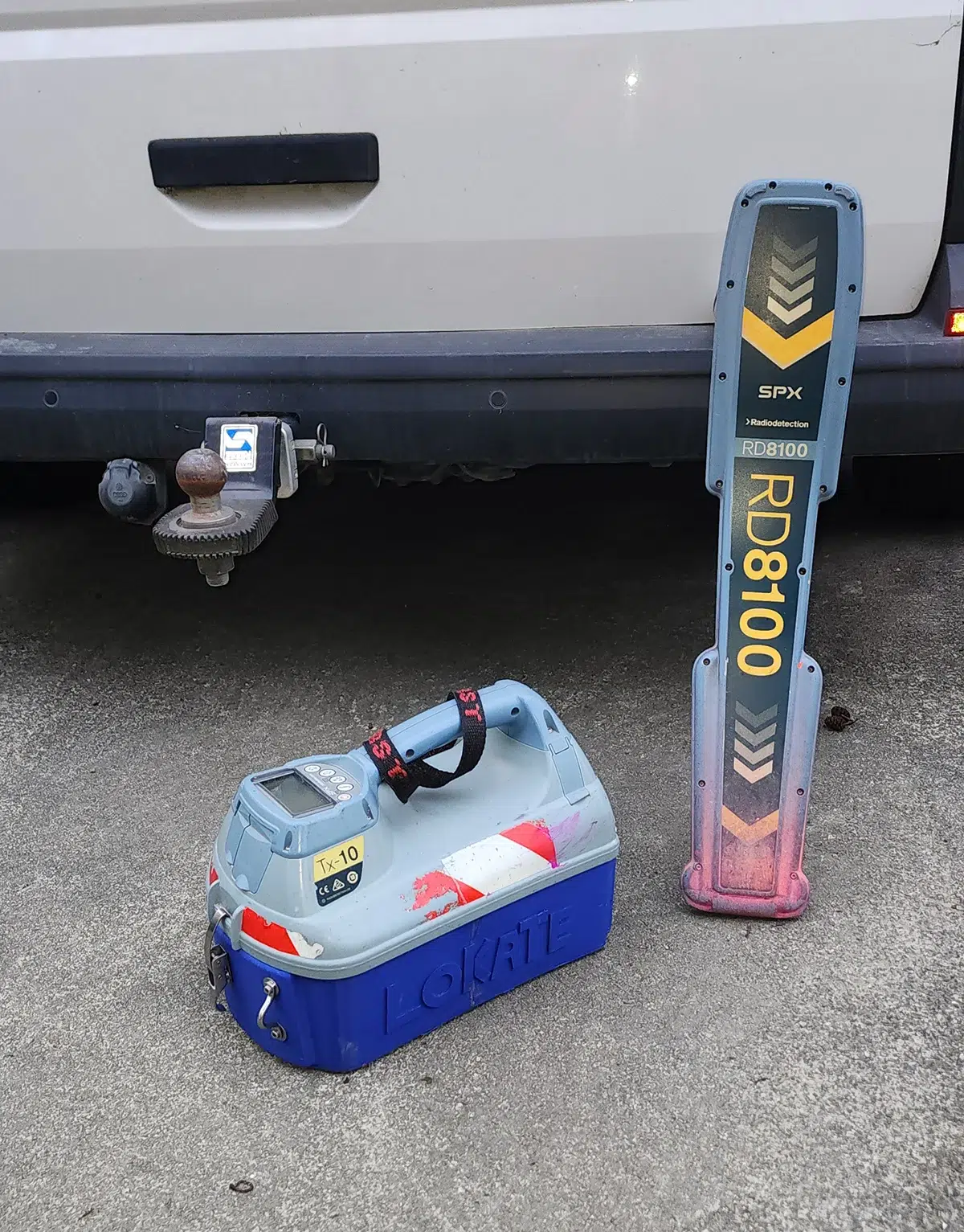
At LoKate Services this is the first tool in the toolbox and the primary method of locating conductive services, we use one of several methods to get a signal from the signal generator, (Genny), on to the target service and then tracing that signal with a Precision Locator, while referencing the plans, (not looking at you and your black crayon Chorus), what we find is then marked on the ground using the Work Safe NZ approved paint colours.
An example of the gear we use is below. (Before it gets covered in paint)…
GPR:
The acronym for Ground Penetrating Radar.
At LoKate Services once all of the conductive services have been traced, we use GPR to help us narrow down the location of the non-conductive services. This is an indirect (wait for it, there’s a big word coming), Geophysical sensing method. Big words aside, these tools in the locating world come predominantly, in a couple of styles which are use case dependent.
Single channel GPR’s are used primarily for ‘scan and mark’, where we push the cart over the target, perpendicular to the target’s alignment and mark in white paint on the ground, white is the Work Safe colour for unknown targets. White is used because there is no way to know precisely what service you are tracing from the Hyperbolae displayed on the screen. However, we can make inferences from the GPR mark out of the suspected service if it closely resembles the asset owner’s plans. Once again reinforcing the necessity of getting plans from the asset owners. Below is an image of the PinPointR single channel GPR’s that we operate.

What we see on the screen…

An example of ‘Scan and mark’


The Single channel GPR’s bigger brother is the Array GPR. Although you can dip your toes in the world of 3D GPR with a single channel GPR by connecting it to an RTK GNSS antenna, (Global Navigation Satellite System) which gives accuracy in the centimeter range, collecting each transect and then processing the collected data in software to allow the surveyed area to be ‘sliced’ through horizontally.
To really dive into the world of 3D GPR you need a Multi-channel Array system. Multi-channel Array GPR’s as the name suggests have more channels in a slightly larger footprint than a single channel unit, this changes the workflow as you are now no longer marking directly on the ground, but data collecting and then post-processing the data in the office and making interpretations based on the conductive services that have been located and the plans from the asset owners.
These units really step up the game by only having to travel in one direction and leveraging their larger size, (mostly in width), to allow us to make fewer passes to scan a given scope, this is most effectively displayed when collecting data on larger road scopes when in Temporary Traffic Management, where the Array cuts down the data collection time dramatically over a single channel unit, improving safety and reducing our clients TTM spend.
But the real win is the improved data clarity over a single channel GPR, which is achieved by having the multiple channels, a crude analogy is a single channel GPR is like looking at an old 480p TV and the data from the Array is like 1080p full HD!!
Below is an image of our ImpulseRadar Raptor 45 Array pushcart on site.

Sites need not be outside exclusively, provided we can walk the Total Station in, we can scan indoors. This picture was taken during the restoration of the Alexander Turnbull House, a Wellington Historical Icon.
After data collection and post processing we can slice through the data and produce georeferenced images that we can use to make the interpretations that were mentioned earlier, these can be exported as DXF files and added to the GIS or to the GNSS equipment to stake out in the field with paint. This data combined with the data captured from the conductive services locate with the EM locator and reality capture is the gold standard for our current technical paradigm.